

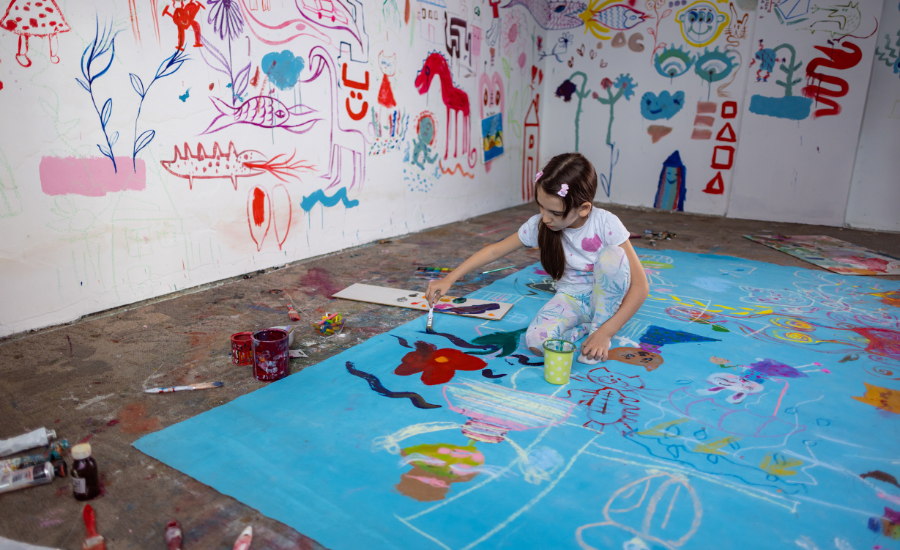
Education is often associated with textbooks, exams, and classroom learning. While these elements are essential for academic success, true education goes beyond memorizing facts and formulas. It also includes developing creativity, emotional intelligence, and the ability to think differently.
This is where art classes play a powerful role. Whether it’s drawing, painting, sketching, or exploring different creative techniques, art can significantly enhance a student’s overall learning experience. Art classes do not just teach artistic skills—they help students grow intellectually, emotionally, and socially.
Here’s how art classes can complement your school or college education and contribute to holistic personal development.
One of the greatest benefits of art education is that it encourages students to think creatively and explore their imagination.
In traditional academic environments, students often follow structured guidelines and fixed answers. Art, however, allows them to experiment freely with ideas, colors, shapes, and concepts.
Through art classes, students learn to:
This creative thinking can also benefit academic subjects such as literature, design, architecture, and even problem-solving in science and technology.
Creating art requires patience and attention to detail. Whether working on a painting, sketch, or craft project, students must concentrate on every element of the process.
Regular participation in art classes helps develop:
These skills naturally transfer to academic studies, helping students focus better during lectures, assignments, and exams.
Students often experience various emotions related to studies, social life, and personal growth. Art provides a healthy and constructive way to express those emotions.
Drawing, painting, or sculpting allows students to communicate feelings that may be difficult to express through words. Many educators recognize art as a powerful tool for emotional balance and mental well-being.
This emotional outlet can help students:
In today’s fast-paced academic environment, this emotional balance is extremely valuable.
Art is not just about creativity—it also involves problem-solving and decision-making.
While creating an artwork, students constantly make choices about colors, composition, textures, and techniques. If something doesn’t work as planned, they learn to adapt and find new approaches.
This process strengthens skills such as:
These abilities are beneficial not only in academics but also in future professional careers.
Art gives students an opportunity to create something unique and personal. Completing an artwork can bring a strong sense of achievement and pride.
When students share their work with teachers, classmates, or exhibitions, they develop confidence in their abilities and ideas.
Art classes help students:
This confidence often carries over into classroom participation, presentations, and social interactions.
Art activities such as sketching, painting, and crafting help students develop fine motor skills and hand-eye coordination.
By practicing detailed artwork, students strengthen their ability to:
These skills are particularly useful for students interested in fields such as design, architecture, animation, and engineering.
Many students discover their creative talents through art classes. What begins as a hobby can sometimes lead to exciting career paths.
Fields related to art and creativity include:
Even students pursuing careers in marketing, advertising, or entrepreneurship benefit from creative thinking developed through art education.
Academic life can sometimes feel overwhelming due to exams, assignments, and deadlines. Art classes provide a refreshing break from routine studies while still contributing to personal development.
Engaging in creative activities helps students maintain a healthy balance between academics and personal interests. This balance often leads to improved motivation and a more positive attitude toward learning.
Conclusion
Art is much more than a recreational activity—it is a powerful educational tool that complements traditional learning. By nurturing creativity, improving focus, encouraging emotional expression, and building confidence, art classes contribute to the holistic development of students.
Whether you are in school or college, participating in art classes can enrich your educational journey in meaningful ways. It allows students to explore their creativity, discover hidden talents, and develop skills that extend far beyond the classroom.
In today’s world, where innovation and creative thinking are highly valued, art education is not just beneficial—it is essential for shaping well-rounded individuals ready to thrive in both academic and professional life.

Sofia Art Academy is a classical-style private art school, provides great opportunity to study with classically-trained master-teachers the fundamentals of classical drawing and painting, to colorful stylized composition.
Sofia Art Academy of Miami 17395 N. Bay Rd. Suite 203 Sunny Isles Beach Miami, FL 33160
Copyright Sofia Art Academy © 2024, All rights reserved.
Designed & Developed By CODE4SURE