

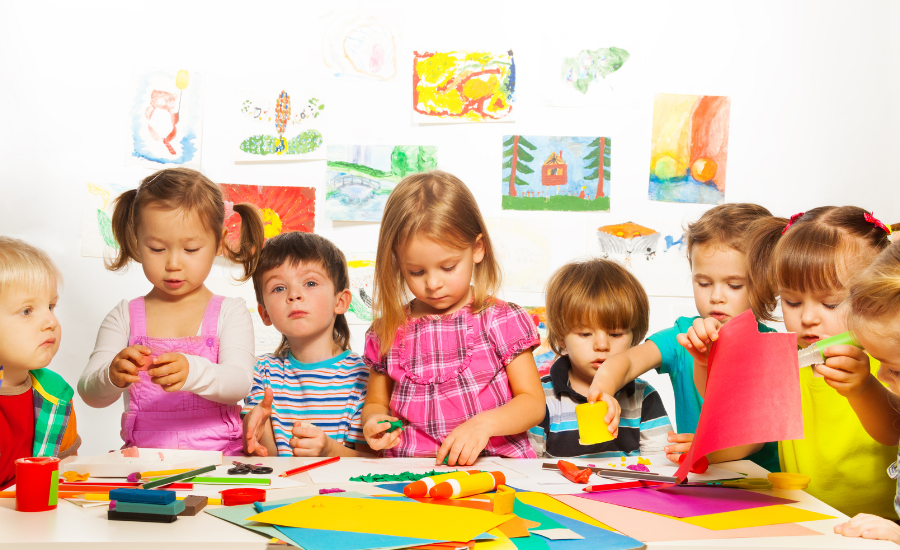
For many children, drawing and painting begin as pure fun. A blue sun, a purple tree, or a person with oversized hands doesn’t need an explanation—it is simply how a child sees the world.
But as children grow, that freedom can sometimes disappear. They may start comparing their artwork with others, worrying about making mistakes, or saying, “I’m not good at drawing.”
This is why more modern art classes for kids are embracing a powerful philosophy: process over perfection.
Instead of focusing primarily on creating a “perfect” final picture, process-focused art education encourages children to experiment, make mistakes, explore materials, develop ideas, and enjoy the creative journey. The goal isn’t to create little artists who can reproduce a picture perfectly. It is to help children become confident thinkers and creative problem-solvers.
What Does “Process Over Perfection” Really Mean?
Process-based art focuses on how children create, rather than simply what they create.
A traditional approach might ask a child to draw a specific object and make it look as close to a reference image as possible. A process-oriented approach may instead give the child a theme, a collection of materials, or an interesting question—and allow them to decide what to create.
There may be no single “right” answer.
A child’s painting might look completely different from what an adult expected. And that’s often the point.
Children learn that creativity is about making choices, trying possibilities, changing direction, and discovering something along the way.
Mistakes Become Part of the Learning Experience
One of the biggest advantages of process-focused art institute in Miami is that mistakes are no longer treated as failures.
A paintbrush may create an unexpected mark. A drawing may not turn out as planned. Colors may mix in surprising ways.
Instead of immediately correcting the child, an instructor can encourage them to ask:
“What can we do with this?”
That simple change in perspective can be incredibly valuable.
Children begin to understand that an unexpected result doesn’t mean they have failed. It may simply mean they have discovered something new.
This mindset can extend far beyond the art studio, helping children approach challenges at school and in everyday life with greater flexibility.
Creativity Matters More Than Copying
Children don’t need art classes simply to learn how to copy an image. They need opportunities to develop their own visual language.
Process-oriented art encourages children to experiment with:
Rather than asking, “Does this look exactly like the example?” instructors can ask questions such as, “What were you thinking when you made this?” or “What would happen if you tried another color?”
These questions encourage children to think independently and explain their creative decisions.
Building Confidence Through Creative Freedom
Confidence doesn’t come from getting every artwork “right.” It often comes from knowing that you can try something, make changes, and keep going.
When children are given freedom to experiment, they learn to trust their own ideas.
A child who once said, “I can’t draw that,” may begin saying, “I’m going to try it this way.”
That shift is meaningful.
Good art classes for children create an environment where every child can participate at their own level. A beginner doesn’t need to compete with an experienced young artist. Each child can focus on exploring, improving, and developing their individual abilities.
Art Helps Develop Problem-Solving Skills
Creative activities are also exercises in problem-solving.
Imagine a child creating a cardboard sculpture that doesn’t stand properly. They need to figure out how to change the structure. Or perhaps they mix two colors and don’t get the shade they expected. They can experiment with another color to see what happens.
These moments encourage children to observe, evaluate, adjust, and try again.
In other words, art isn’t only about creativity—it also involves critical thinking and decision-making.
Parents Can Encourage the Process at Home
The process-over-perfection philosophy doesn’t have to stop when class ends.
Parents can support creative confidence by changing the questions they ask about their child’s artwork.
Instead of:
“What is it?”
Try:
“Tell me about what you made.”
Instead of:
“Why did you use that color?”
Try:
“What made you choose those colors?”
And instead of focusing only on the finished picture, notice the effort:
“I love how you experimented with different textures.”
These small responses communicate an important message: your ideas and creative journey matter.
The Future of Art Education Is About More Than the Final Picture
A beautiful finished artwork can certainly be rewarding. But the real value of children’s art education often lies beneath the surface.
Every brushstroke, experiment, mistake, revision, and creative decision can help children develop confidence, curiosity, patience, and independent thinking.
That is why “process over perfection” is becoming such an important philosophy in modern art education.
The goal isn’t to create children who are afraid of making mistakes because their artwork must be perfect.
The goal is to create children who are curious enough to experiment, confident enough to express themselves, and resilient enough to try again.
And sometimes, the most valuable masterpiece isn’t the picture hanging on the refrigerator.
It’s the confidence a child builds while creating it.

Sofia Art Academy is a classical-style private art school, provides great opportunity to study with classically-trained master-teachers the fundamentals of classical drawing and painting, to colorful stylized composition.
Sofia Art Academy of Miami 17395 N. Bay Rd. Suite 203 Sunny Isles Beach Miami, FL 33160
Copyright Sofia Art Academy © 2024, All rights reserved.
Designed & Developed By CODE4SURE