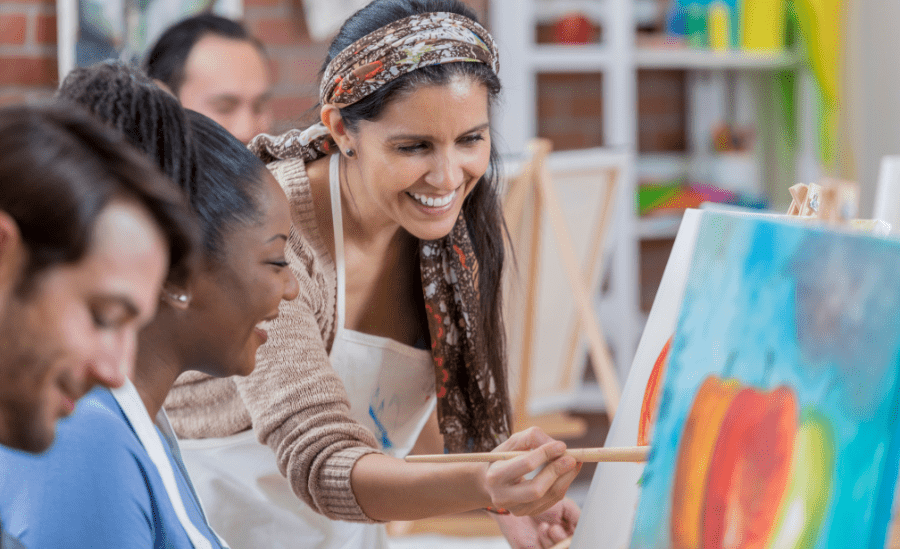
Stepping into a shared art studio where grandparents, parents, and kids create side by side is like witnessing a living tapestry of family stories, skills, and emotions. The simple act of painting, sculpting, or crafting together can dissolve generational divides, spark conversations, and nurture deep bonds. Here’s how intergenerational art classes bring families closer, blending wisdom, energy, and fresh perspectives under one roof.
Shared Creativity Becomes a Universal Language
Art needs no translator. When a grandparent chooses a brushstroke, a parent selects a color palette, and a child experiments with clay, each participant is expressing themselves in a nonverbal, honest way. This shared creative process:
- Breaks Down Barriers: Age-based differences—whether based on upbringing, technology, or life experience—melt away when everyone focuses on a canvas.
- Encourages Empathy: A teen might explain why they prefer bold, abstract strokes, while a grandparent may share a story behind a traditional motif. These exchanges foster mutual understanding and curiosity.
- Celebrates Individual Voices: Each family member learns to appreciate that creative expression can look—and feel—different, yet still contribute to a cohesive family artwork.
Exchange of Skills and Life Lessons
Every generation brings unique strengths to the studio. When grandparents, parents, and kids collaborate, they effectively create a “living curriculum” of cross-generational learning.
- Grandparents as Mentors
Having decades of life experience, older adults often introduce traditional techniques—like hand-mixing watercolors or weaving simple canvases—that may have been common decades ago. Their steady guidance also instills patience and resilience: “If the glaze cracks, let it dry, then smooth it out,” or “Try mixing yellow with a little red instead of reaching for a new pigment.” - Parents as Facilitators
Parents often bridge the gap by translating grandparents’ methods into language kids understand—demonstrating how a color wheel works, or explaining why layering clay is like building blocks. They also model collaborative problem-solving: “Let’s figure out how to paint this background together.” - Kids as Innovators
Young artists bring boundless imagination and fearlessness—sometimes willing to try a daring technique that surprises the whole family. Their curiosity can prompt grandparents to try new materials (like digital drawing tablets) or remind parents to let go of perfectionism. A child’s fresh perspective often nudges the whole group to see possibilities beyond conventional methods. Strengthening Emotional Bonds
Creating art side by side yields more than pretty pictures: it fosters emotional connection.
- Quality Time Without Screens
In a world dominated by devices, carving out an hour in a paint-splattered studio is a shared experience free from notifications. Conversations naturally follow: “Grandma, why did you choose that pattern?” or “Dad, how did you learn to sculpt?” These questions deepen understanding of one another’s journeys. - Celebrating Achievements Together
Whether it’s a toddler’s first finger painting, a teenager’s debut portrait, or a grandparent’s handcrafted ceramic bowl, each accomplishment invites applause, high-fives, and pride. These celebrations reinforce self-esteem and mutual respect across ages. - Safe Space for Vulnerability
Art can be therapeutic. A grandparent dealing with mobility issues may find comfort in gentle brushwork, while a teen grappling with exam stress might find release in abstract color play. Witnessing each other’s creative triumphs and struggles creates empathy: parents see their children’s anxieties, and children see their grandparents’ resilience. Crafting Lasting Keepsakes
Intergenerational art projects often result in tangible family heirlooms—artworks that become conversational focal points in the years to come.
- Collaborative Family Canvas
A large canvas where each person adds a section: perhaps a floral motif from grandma, geometric shapes from dad, and a whimsical doodle from a child. Hanging this in the living room becomes a visual reminder of shared moments and collaboration. - Multi-Generational Photobook or Zine
Photograph each participant’s process—mixing paints, shaping clay, or choosing materials—and compile an illustrated zine. Grandparents can annotate with handwritten memories, parents add captions about current inspirations, and kids decorate with stickers. This book becomes a cherished keepsake for future reunions. - Clay Impressions or Handprint Art
Taking handprints or thumb impressions in clay, then firing them into small tiles, captures a moment in time—the ring size of grandma’s hand, the tiny palm of a toddler, the fingers of a teenager. These tiles can be arranged as a mosaic, serving as a tactile family portrait.
Practical Tips for a Successful Intergenerational Studio Experience
- Choose Age-Appropriate Projects
Offer simple tasks (like stamping with ink pads) for younger children, structured yet flexible painting exercises for adults, and comfortable seating or easel adjustments for seniors. - Foster a Judgment-Free Environment
Emphasize that there is no “right” or “wrong” in art. Encourage experimentation—even if a sculpture collapses or a color mix goes awry. The focus is on the journey, not perfection. - Rotate Roles
Have grandparents lead one session (sharing a traditional technique), parents lead another (introducing modern materials), and kids lead a playful creative exercise. This rotation ensures everyone contributes and learns from each other. - Plan Regular Family Studio Days
Consistency is key. Whether it’s every Sunday afternoon or one evening per month, carving out dedicated art time reinforces commitment and creates a cherished ritual.
Conclusion
When grandparents, parents, and kids gather in a single studio, the walls seem to disappear—leaving only shared laughter, concentrated brushstrokes, and heartfelt storytelling. Art becomes more than a pastime; it becomes a bridge connecting life lessons, creative sparks, and emotional bonds. In this studio, generations don’t just coexist; they collaborate, inspire each other, and craft a visual legacy that celebrates each family member’s unique voice. Whether you’re mixing pigments, molding clay, or sketching across a communal canvas, remember: in the union of hands and hearts, art truly connects generations.